Dairy Free Walnut Basil Pesto
If you love pesto but want a version that’s simple, approachable, and easy to make on repeat, this dairy-free walnut basil pesto is the one. It’s bold, fresh, and made with just a handful of ingredients that let the basil really shine. No cheese, no complicated steps, and no expensive pine nuts.

This post contains affiliate links.
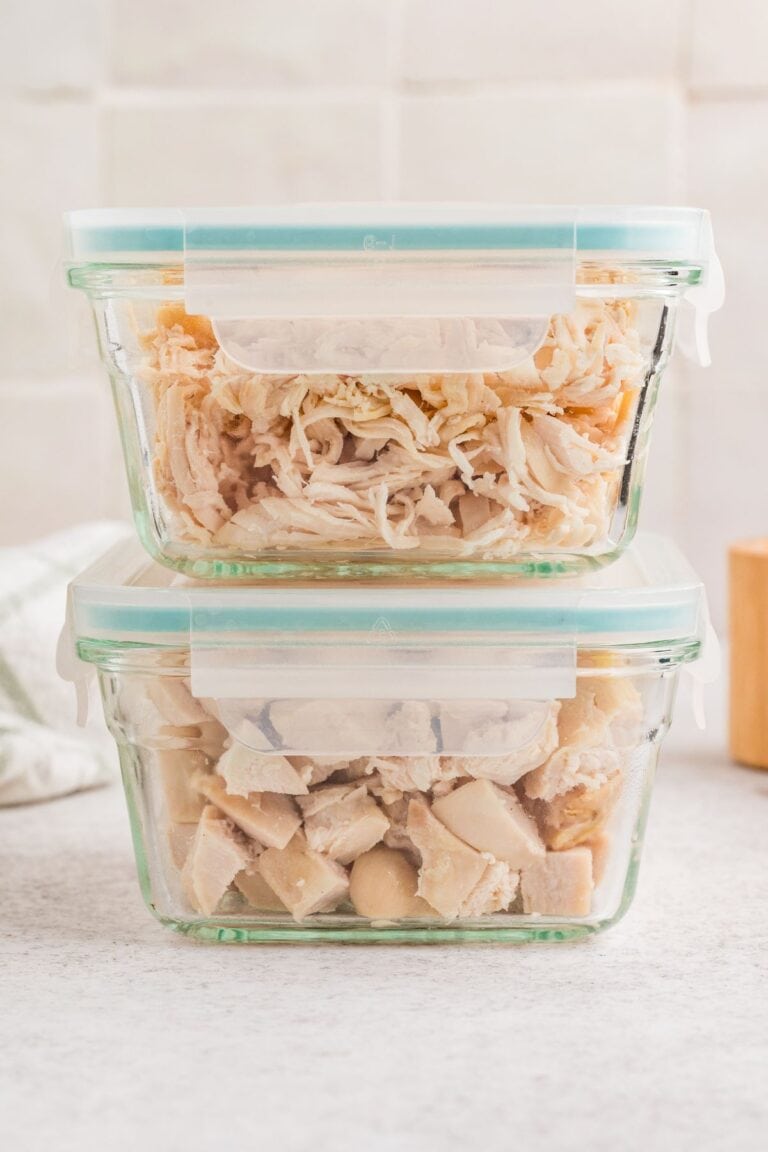
I’ve been making this pesto for years, and it’s the version I always come back to for everyday meals. It’s naturally dairy free and vegan, tastes great and works with just about everything. I spread it on sandwiches, add it to gluten free noodles, and it’s one of my favorite ways to dress up meal prep Dutch oven shredded chicken.
Traditional pesto uses pine nuts, which are delicious but usually pretty expensive. Walnuts bring a similar richness with a slightly deeper, earthier flavor that pairs beautifully with fresh basil and lemon. And no parmesan is needed.
This pesto is super simple and freezes great for meal prep. It’s a sauce you’re going to want to always keep on hand. I promise.
Why You’ll Love This Pesto Sauce
- A few simple ingredients give this sauce a big flavor – all without any cheese (not even vegan cheese).
- Walnuts replace pine nuts, making this realistic for weekly meal prep.
- Works just as well on pasta as it does on sandwiches, vegetables, or snacks.

Ingredient Notes
Fresh Basil – Use the freshest basil you can find. I’ve used the stems in a pinch, but the leaves are what you want to use here.
Olive Oil – Use a good quality extra virgin olive oil.
Lemon Juice – Skip the bottled juice and opt for a fresh lemon to get your juice. It makes a huge difference as the lemon is an important part of the flavors.
Full ingredient list can be found in the recipe card below.
How To Make Vegan Walnut Pesto
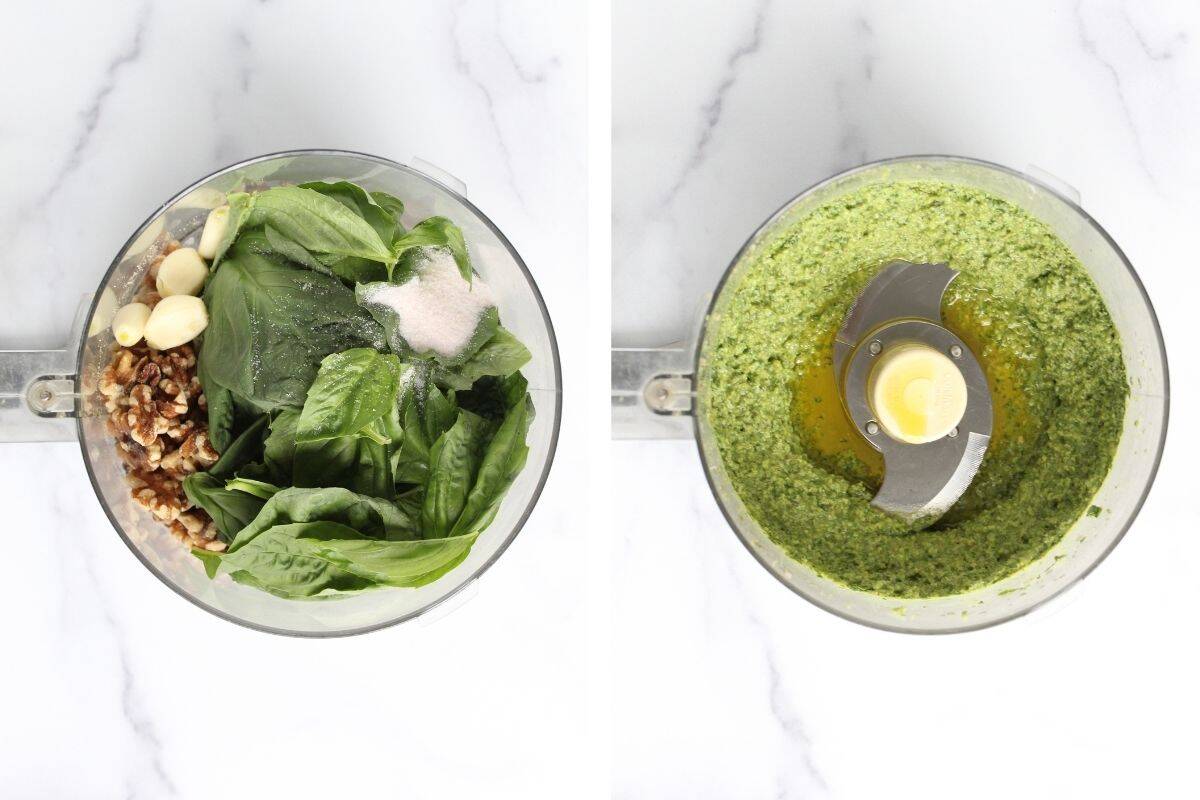
- Add the basil, garlic, walnuts, lemon juice, and salt to a food processor. Pulse for 30-40 seconds, until everything is finely chopped.
- With the food processor running, slowly pour in the olive oil until the pesto is smooth and fully combined.
- Enjoy the pesto immediately, or move to an airtight container, and pour additional olive oil on top for storage. Store in the refrigerator for up to 5 days or freeze for up to 3 months.

Jen’s Recipe Tips
- Don’t over-process the pesto. Pulse just until smooth and spoonable.
- Taste at the end and adjust salt as needed.
- Add olive oil slowly so the pesto emulsifies properly.
- Adding a thin layer of olive oil over the top of the basil will help keep it fresh in the refrigerator.
- I love freezing leftovers in ice cube trays then transferring to a freezer bag for easy access later.
Serving Suggestions
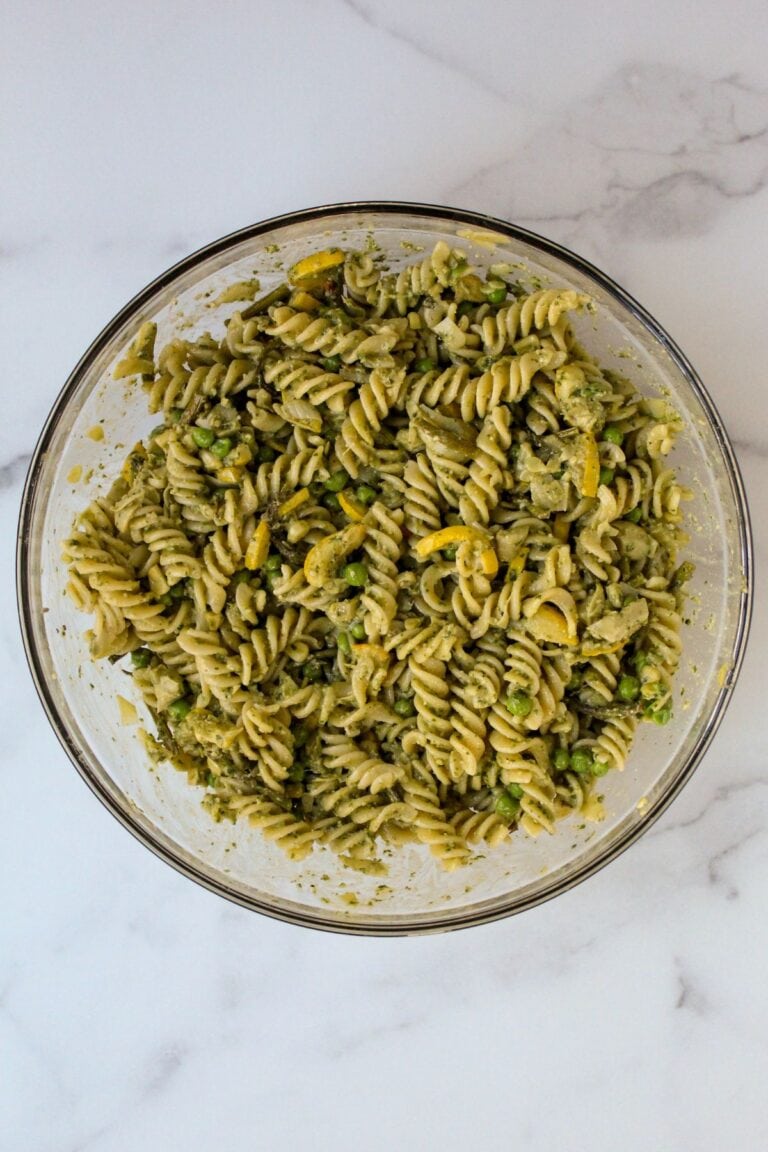
Lately, my favorite way to eat this sauce is in a pesto pasta salad with roasted vegetables. It’s like summertime in a bowl, and I can’t get enough of it.
You can use this pesto the same way you would normally use pesto. It’s one of those sauces that earns its place in the fridge. Here are a few ways I use it regularly:
- Tossed with pasta (I use gluten-free pasta – any shape)
- Spread on sandwiches or wraps
- Spoon it onto grilled or roasted vegetables
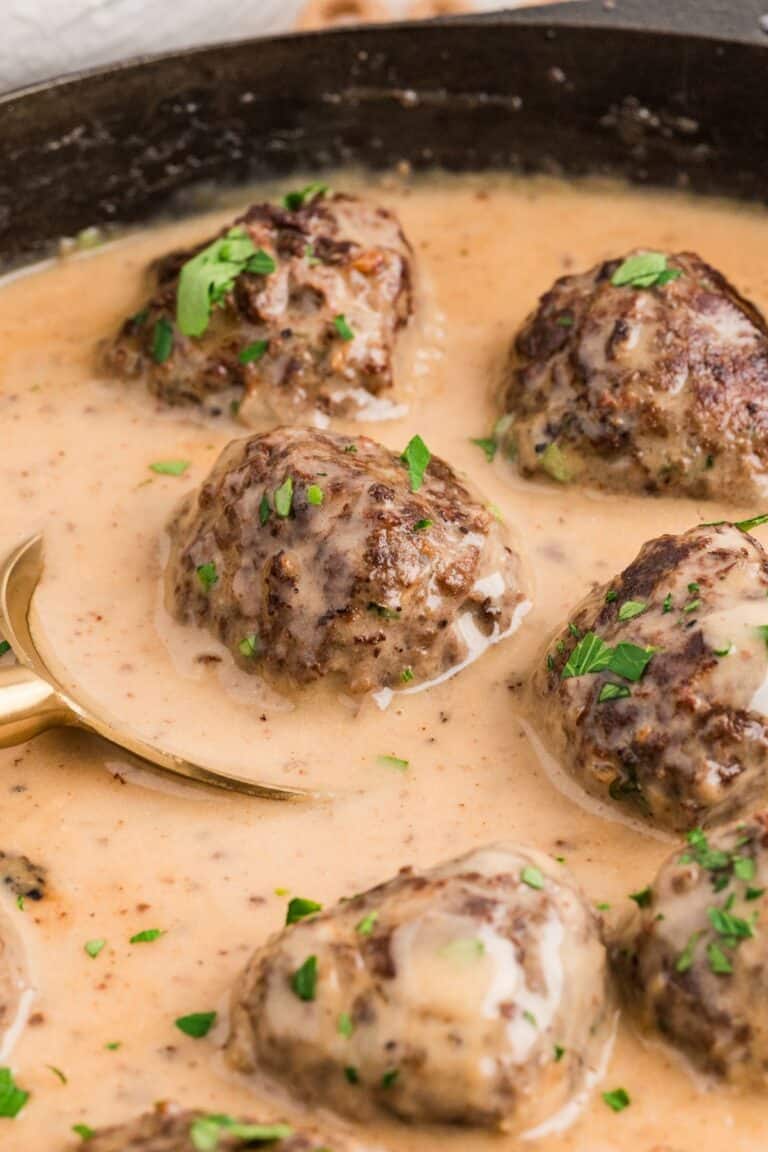
- Stirred into meatballs (chicken is especially delicious)
- Toss it into lemon herb quinoa with some chicken breast for an easy grain salad.
Recipe FAQs
Yes. Traditional pesto includes cheese, but it’s easy to make a flavorful pesto without it. This dairy-free version relies on basil, walnuts, lemon juice, and olive oil for richness and balance.
Homemade dairy-free pesto will keep for up to 5 days in the refrigerator when stored in an airtight container with a thin layer of olive oil on top.
Yes. This pesto freezes very well for up to 3 months. Freeze in small portions so it’s easy to thaw only what you need.
Pesto can oxidize when exposed to air. Adding a thin layer of olive oil on top and storing it tightly sealed helps preserve the bright green color.
Extra virgin olive oil is best for pesto. It adds flavor and helps create a smooth, cohesive sauce.
Yes, but a food processor makes it much easier. You can also finely chop everything by hand or use a mortar and pestle, though it takes more time.
Dairy-free pesto is great on sandwiches, mixed into pasta salads, spooned over roasted vegetables, stirred into meatballs, or spread on crackers or rice cakes.
Dairy Free Walnut Basil Pesto

Equipment
- Food processor
Ingredients
- 3 cups fresh basil leaves (washed and dried well)
- 4 medium garlic cloves
- 1 cup walnut halves (unroasted)
- 2 tablespoons fresh lemon juice
- 1 teaspoon sea salt
- ½ cup olive oil (extra virgin) plus more for storing
Instructions
- Add the basil, garlic, walnuts, lemon juice, and salt to a food processor. Pulse for 30–40 seconds, until everything is finely chopped.
- With the food processor running, slowly pour in the olive oil until the pesto is smooth and fully combined.
- Enjoy the pesto immediately, or move to an airtight container, and pour additional olive oil on top for storage. Store in the refrigerator for up to 5 days or freeze for up to 3 months.
Notes
- Don’t over-process the pesto. Pulse just until smooth and spoonable.
- Taste at the end and adjust salt as needed.
- Add olive oil slowly so the pesto emulsifies properly.
- Adding a thin layer of olive oil over the top of the basil will help keep it fresh in the refrigerator.
- I love freezing leftovers in ice cube trays then transferring to a freezer bag for easy access later.
- This recipe makes about 1 cup of pesto sauce.
Nutrition

About Jen
I create nightshade-free, dairy-free, and gluten-free recipes that the whole family will love. After years of managing my own food sensitivities, I’ve learned how to make dishes that are flavorful, fun, and easy enough for busy weeknights. Let’s bring joy back to your table, one recipe at a time. More About Me